Belt Drive vs Direct Drive Turntable UK: Choose for Listening Job, Not Hype
Direct answer: belt for calm album listening; direct for control/cueing needs
For belt drive vs direct drive turntable UK shoppers, the practical split is simple: choose a belt-drive deck when you mainly want calm album listening at home, and look at direct drive when you need quicker start-up and pitch control for cueing or DJ-style work. Drive type is a use-case decision, not a guarantee of better sound.
How each drive works in plain UK English
On a belt-drive turntable, a rubber belt links the motor to the platter. That layout helps isolate motor vibration from the spinning record and suits relaxed home listening. On a direct-drive turntable, the motor turns the platter itself, which typically means faster start-up and useful pitch control when you are cueing or mixing. Neither design is “better” in every room; each matches a different listening job.
Independent UK audio guidance puts it the same way: belt drive for relaxed listening, direct drive when control and cueing matter, and drive type alone does not decide sound quality. See the Audio Gear UK belt-drive versus direct-drive explanation for that framing.
Comparison table: start-up, maintenance, use cases
| Point | Belt drive | Direct drive |
|---|---|---|
| Start-up feel | Usually steadier build-up to speed, fine for sitting down with an LP | Typically quicker to reach speed, handy for cueing |
| Day-to-day upkeep | Belts can stretch or perish over time and may need replacing | No belt to renew, though the deck still needs ordinary care |
| Best-fit use | Relaxed home album listening | DJ/cueing and situations where pitch control matters |
Use the table as a shopping filter for how you will actually play records in the UK, not as a ranking of “best sound”.
Drive type is not a sound-quality magic switch
A common mistake in belt driven record player uk and direct drive turntable beginners searches is treating the motor layout as a magic switch for fidelity. Cartridge, setup, speakers or headphones, and how carefully you place the deck all matter. Drive type alone does not guarantee sound quality, so do not assume belt drive always sounds better—or that direct drive always sounds worse—for home listening.
Who should ignore DJ-focused decks
If your evenings are albums, not beatmatching, you can usually ignore DJ-focused feature lists. Pitch faders, ultra-fast start, and club-style control are useful when cueing is part of the job; they are optional extras if you simply want a calm evening with vinyl. Beginners comparing which turntable drive type uk options should match the deck to listening habits first, then weigh extras.
Where the Turnio player fits
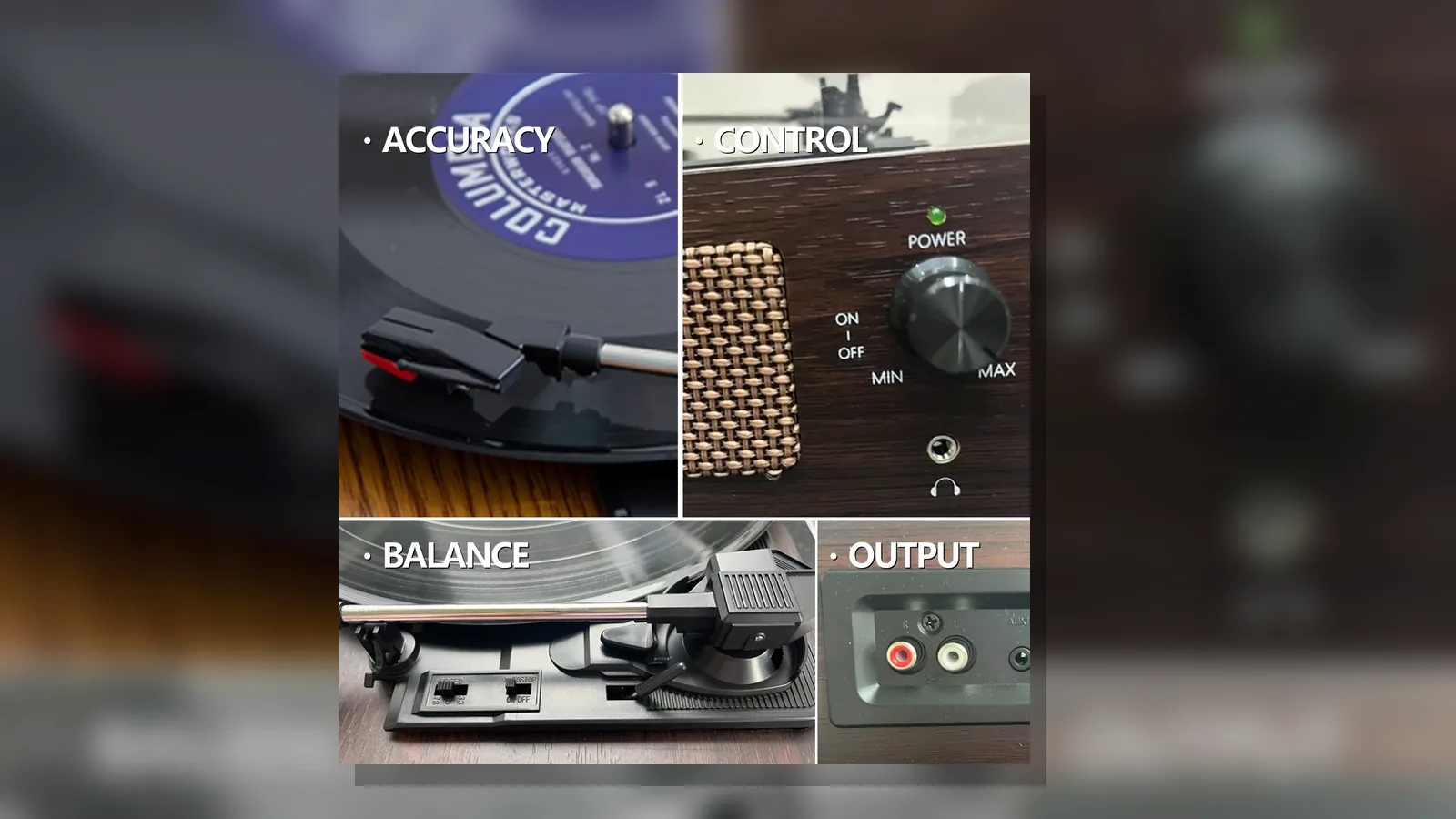
If a belt-drive home listening layout is what you need, the live Turnio product page describes a walnut wood-grain player with three speeds (33, 45 and 78), Bluetooth 5.4 input, two built-in 5 W speakers, RCA line out, and a headphone socket. Treat those points as page claims only, not independently verified lab facts. Review the current Turnio vintage Bluetooth record player details to see the live listing in a home-listening context.
FAQ
Is belt drive always quieter or better sounding?
No. Belt drive can isolate the motor from the platter and suit relaxed listening, but drive type alone does not guarantee sound quality.
When does direct drive make more sense?
When you want faster start-up and pitch control for DJ or cueing work, rather than mainly sitting down with full albums.
What does the live Turnio listing claim about drive type?
The live detail page lists a walnut wood-grain cabinet, two built-in 5 W speakers, Bluetooth 5.4 input, RCA line out and a headphone socket.